MULTI-WEEK CLASSES

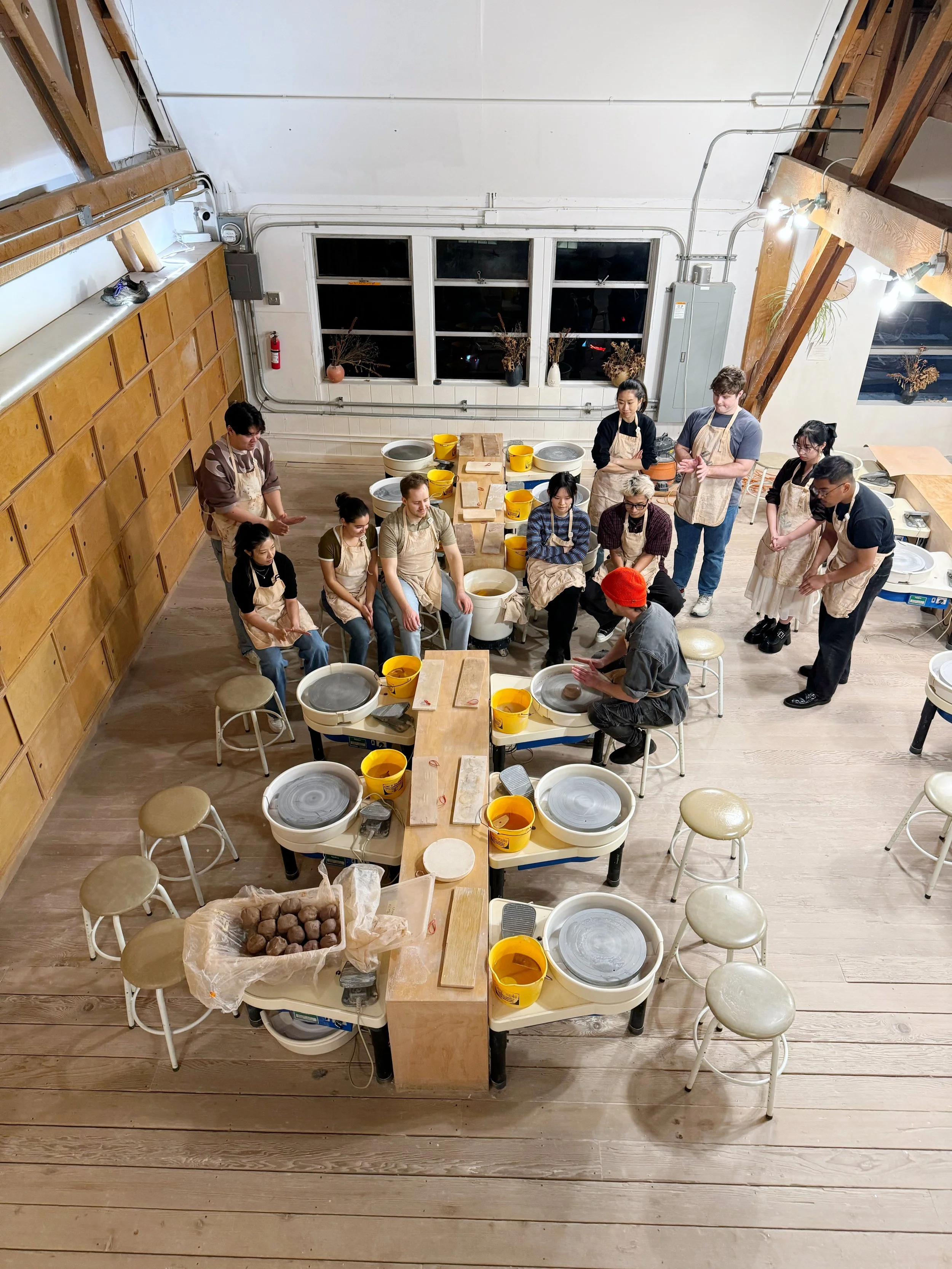
Our pottery classes in San Francisco's Mission District meet once a week for 2.5 hours. September/October classes are posted below.

What Makes Our San Francisco Pottery Studio Different?

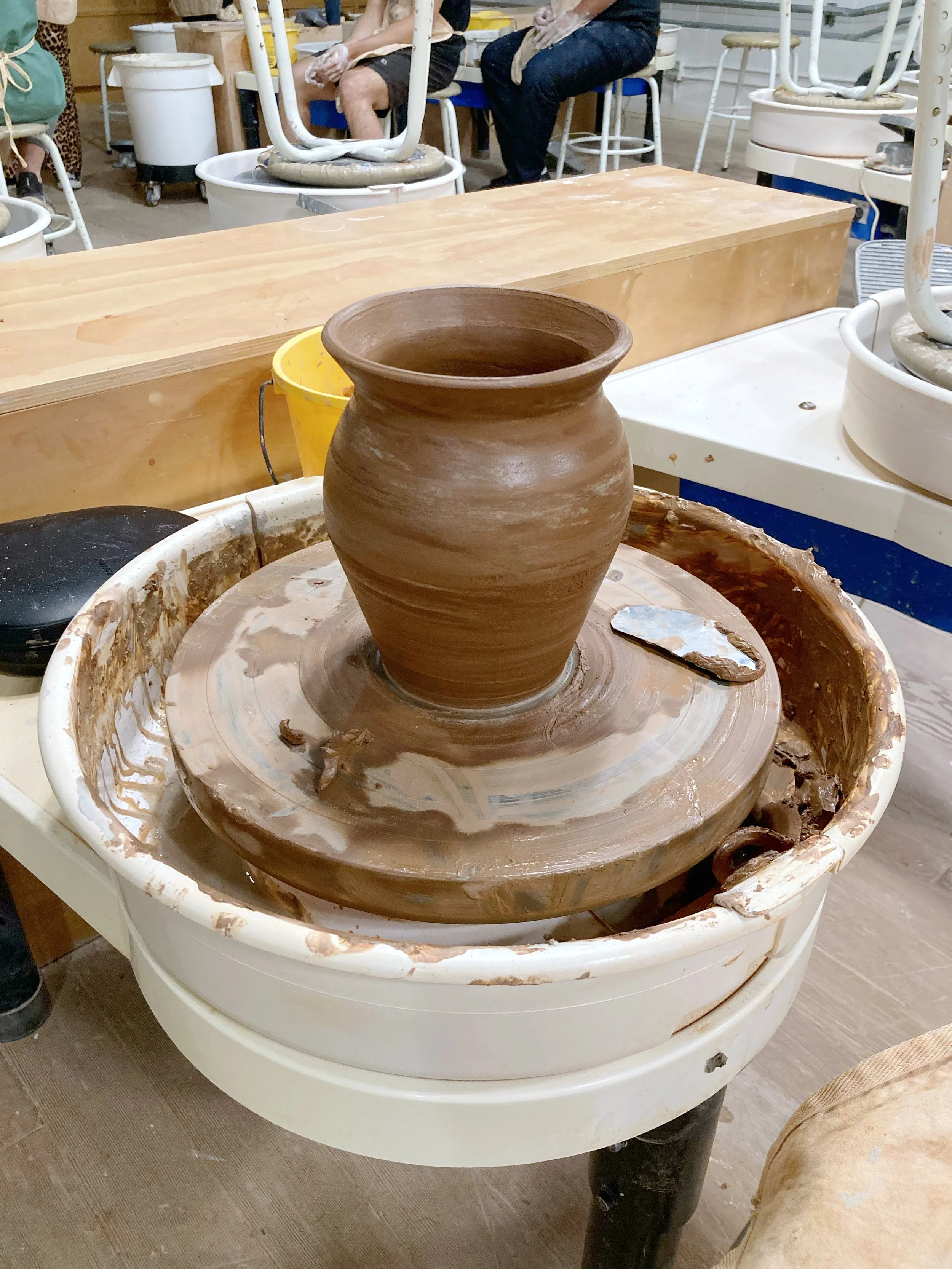
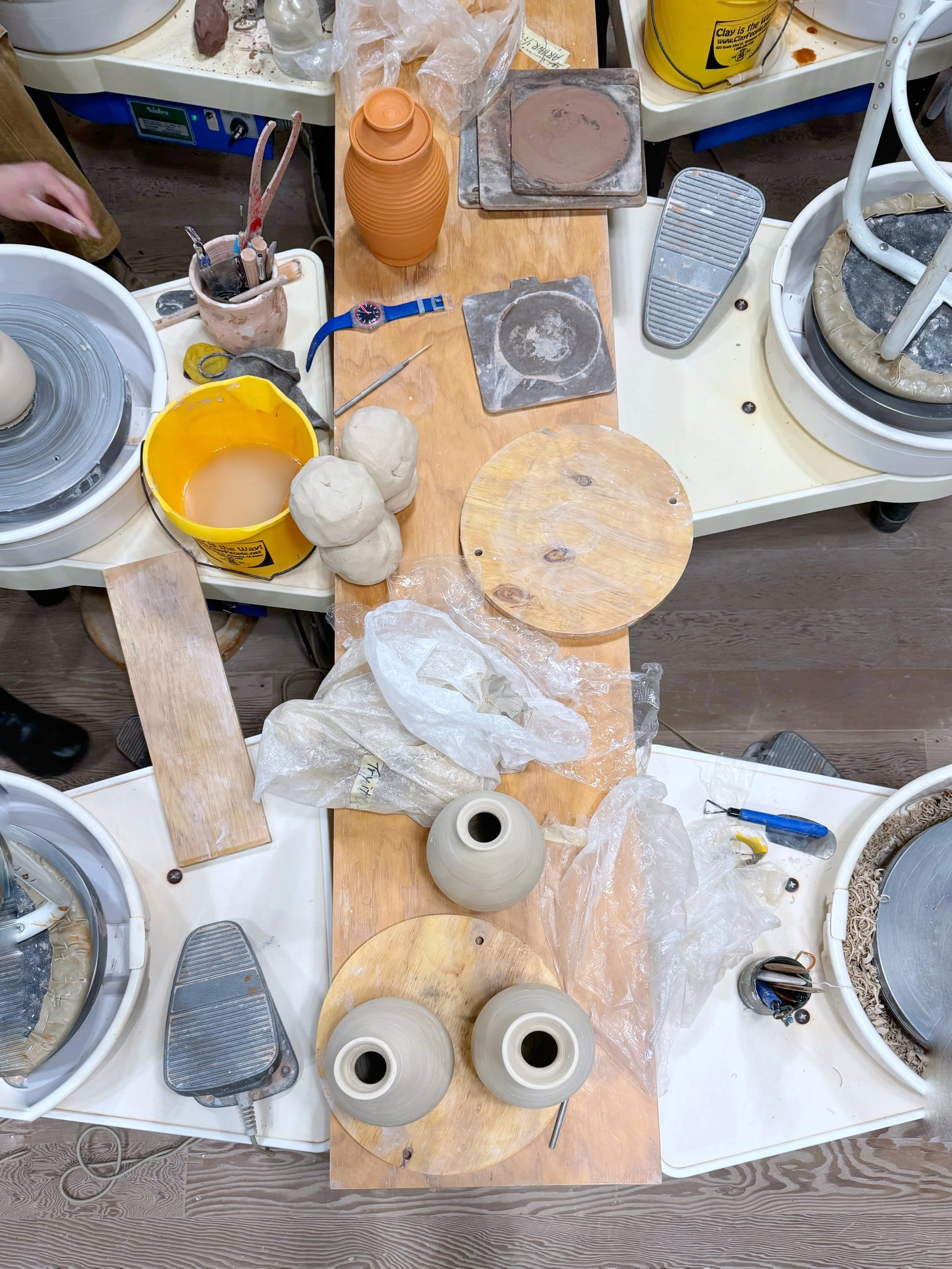
Five clay bodies to choose from. Students get 25 lbs of clay and may use any of our five student-available clay bodies (members get access to all seven, including porcelain and Dragon Fruit). Instructors will recommend the right clay for your skill level and project.

Open studio practice five days a week. Most studios offer one practice day; we offer five. Specific days depend on your class day — your instructor will walk you through the schedule on day one.

8-week classes, not 6. We extend the standard curriculum so every student has multiple opportunities to fire their pieces and refine technique over time. Real skill development needs more than six sessions.

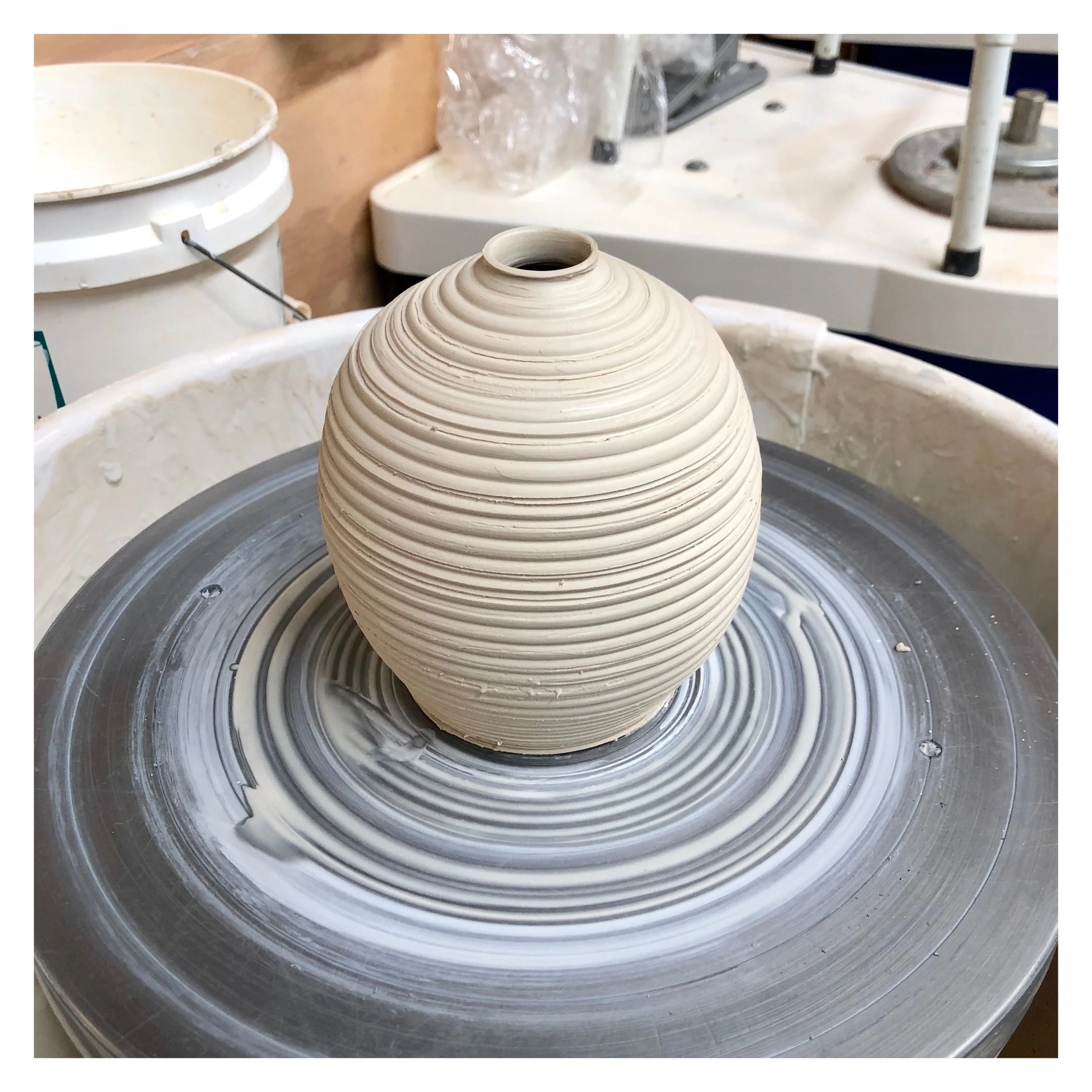
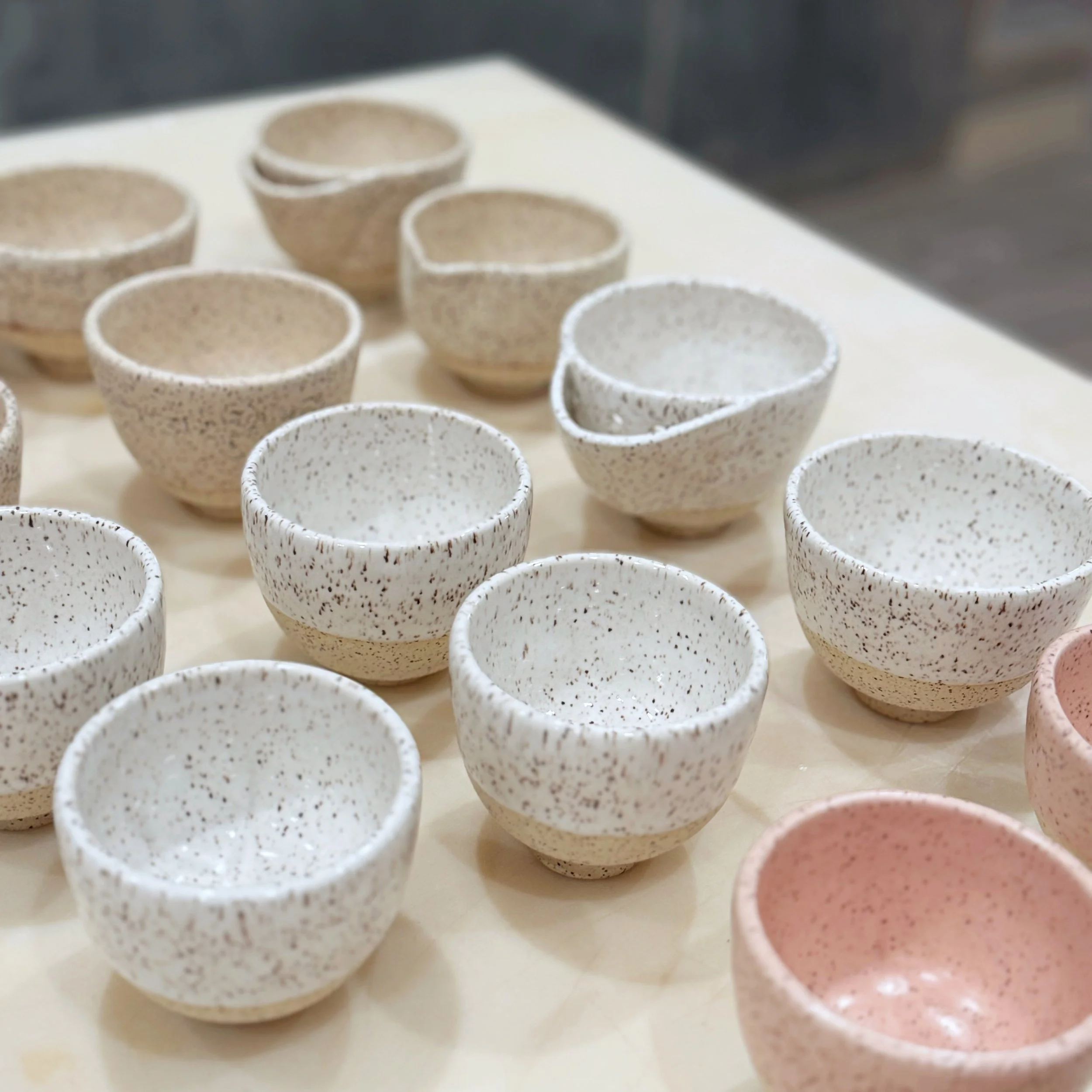
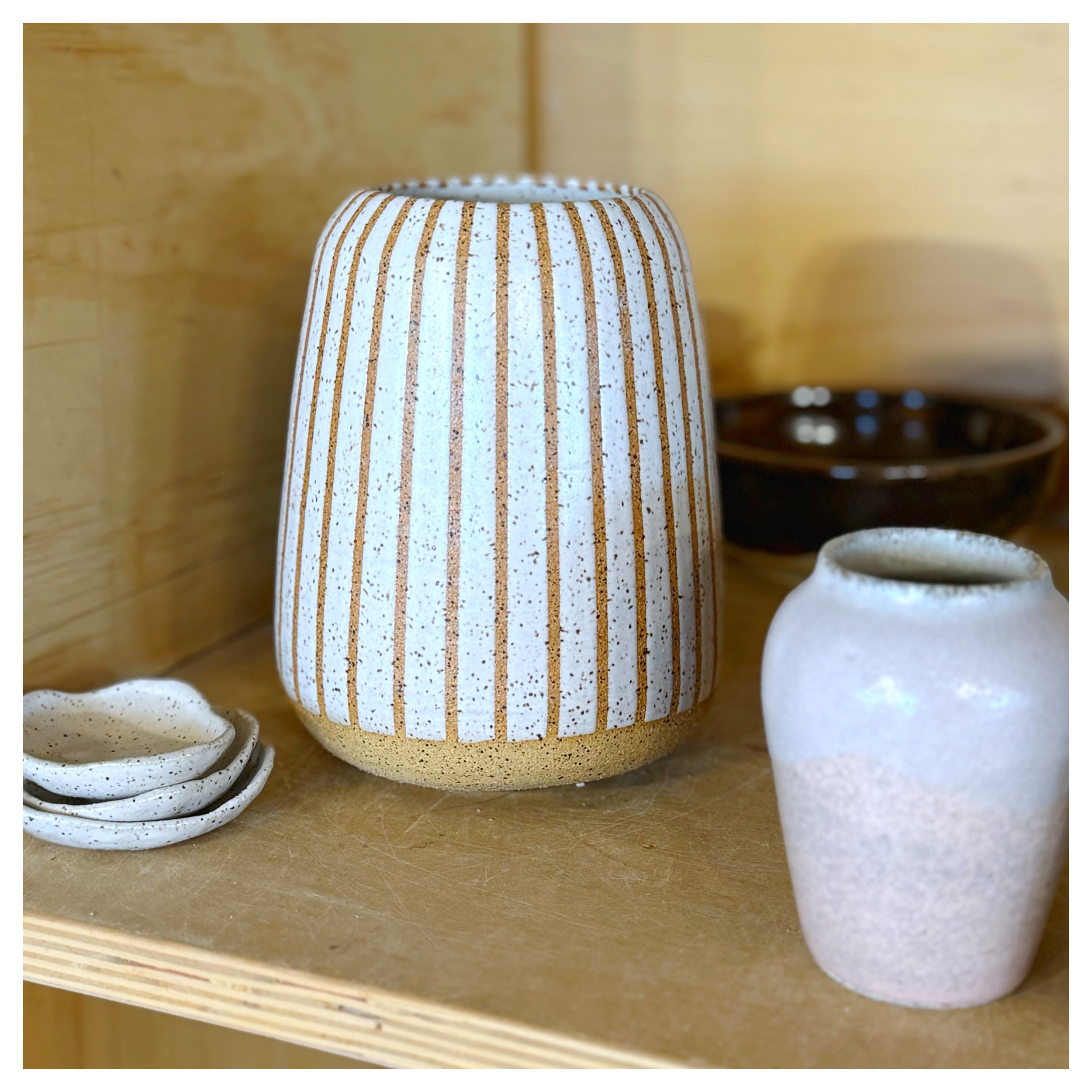
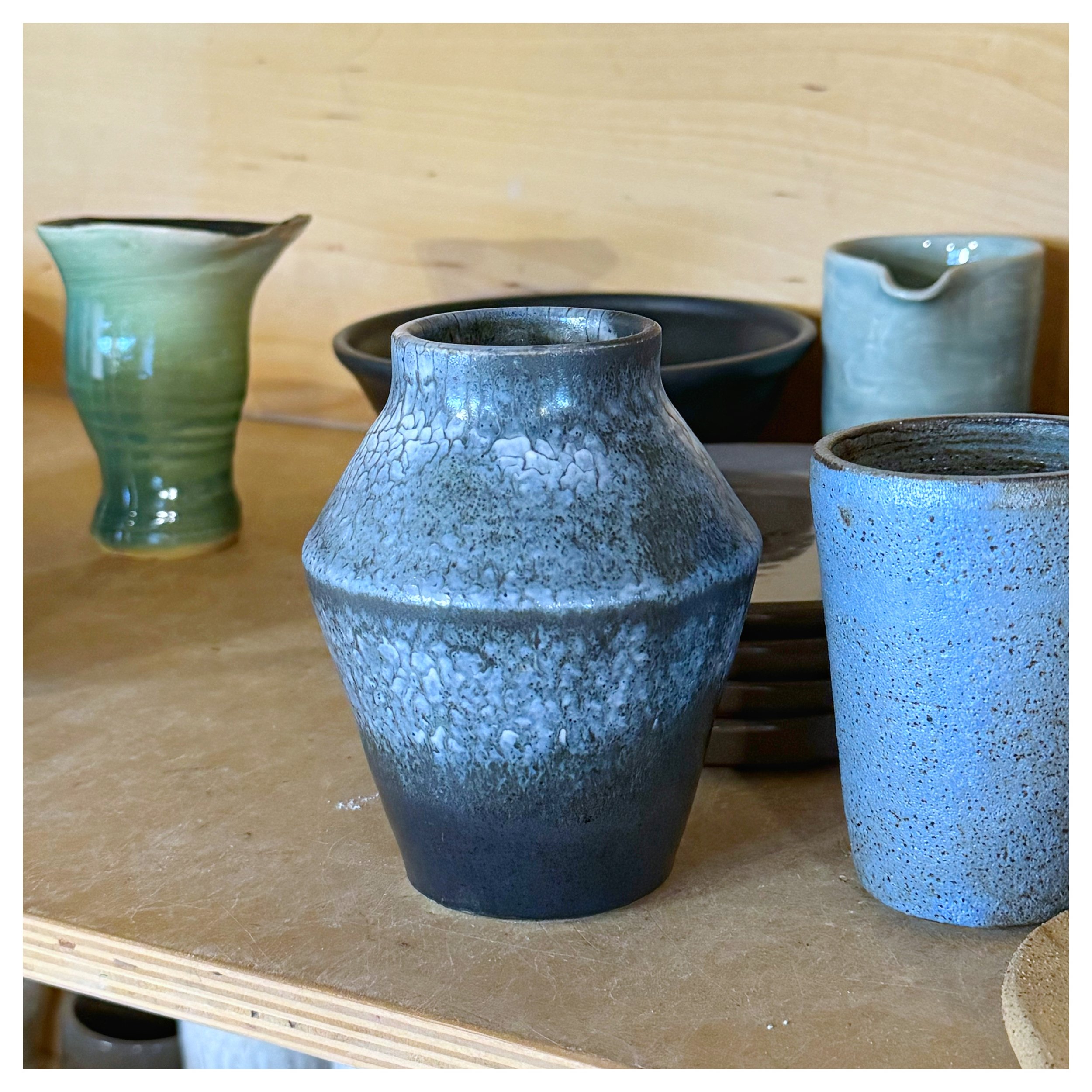
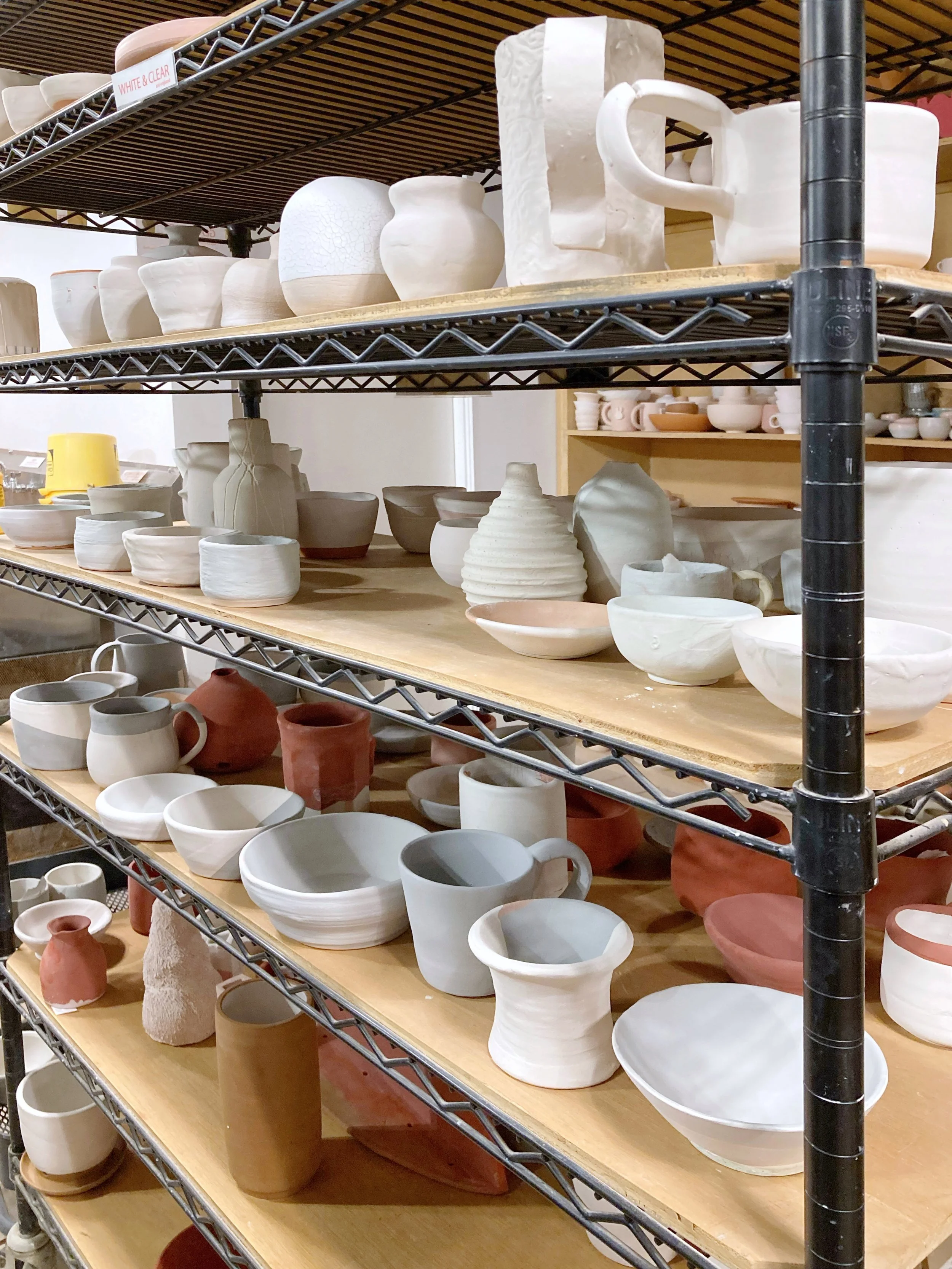
65+ in-house designed glazes. We're the only cone 6 pottery studio in the Bay Area that designs and mixes all of our own glazes — students get full access at no additional cost.

Working artists as instructors. Every Hickory Clay instructor has their own studio practice. Meet our instructors →

Classes include clay, tools, and aprons. Learn about our wheel throwing facilities.

Intro to Throwing and Glazing

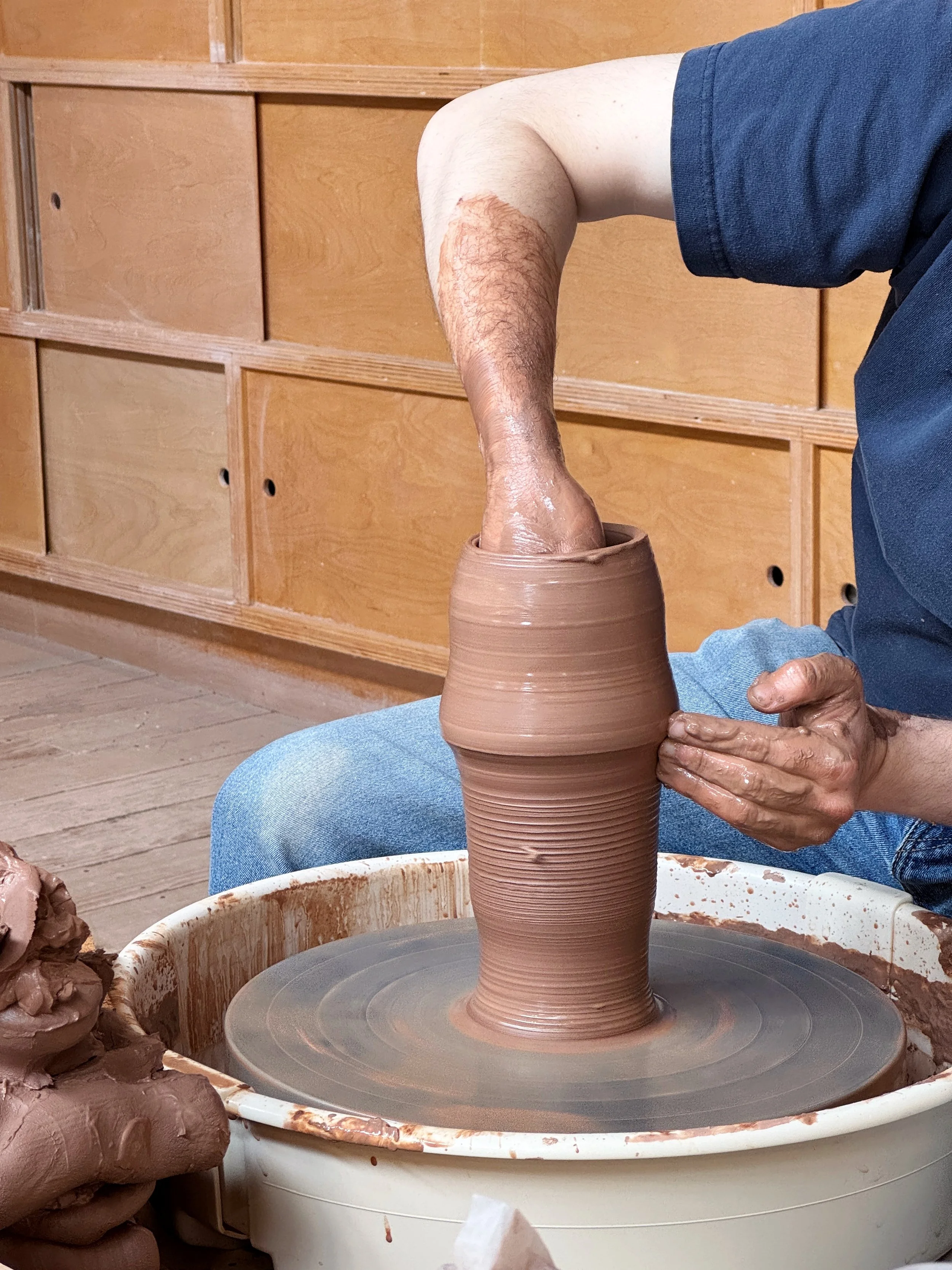
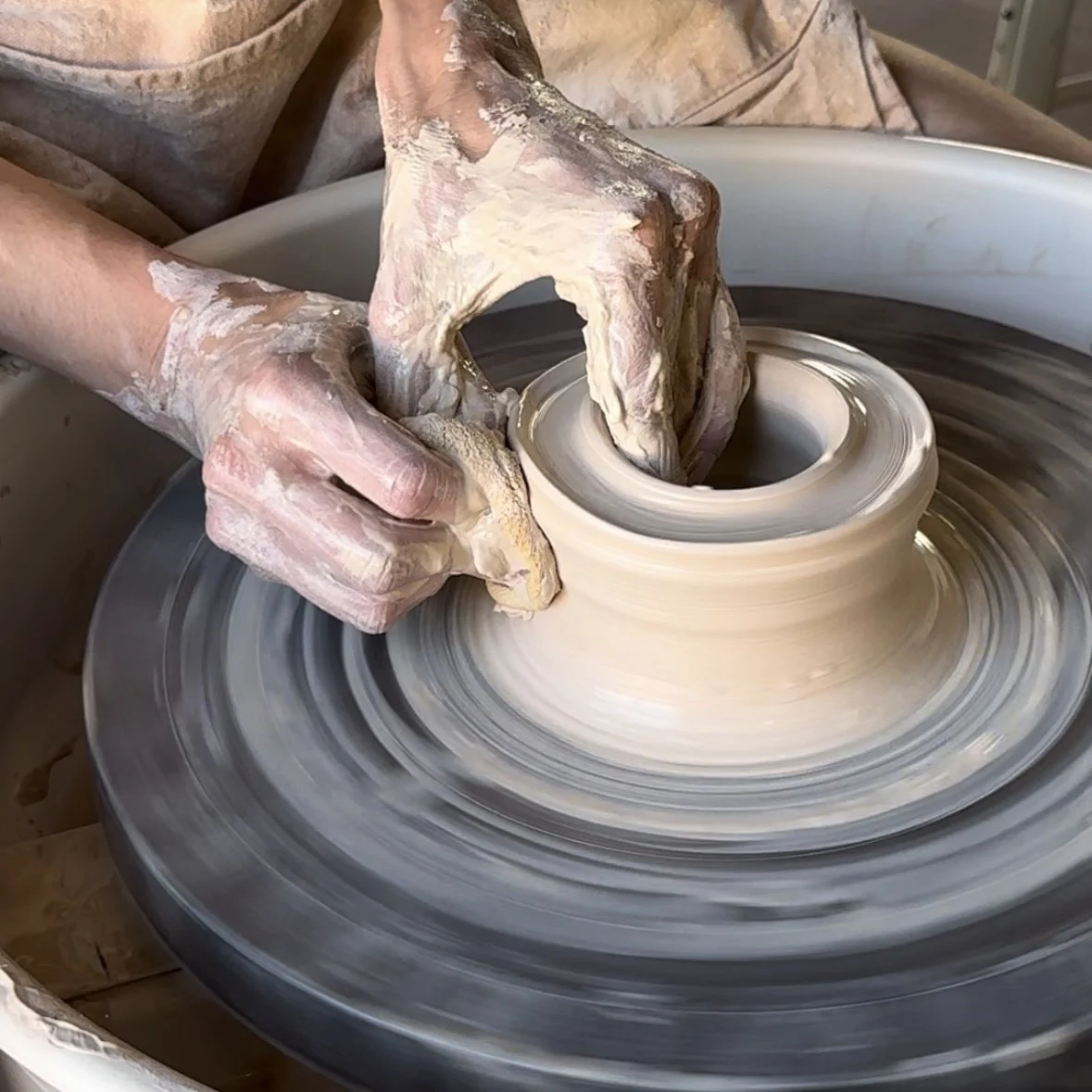
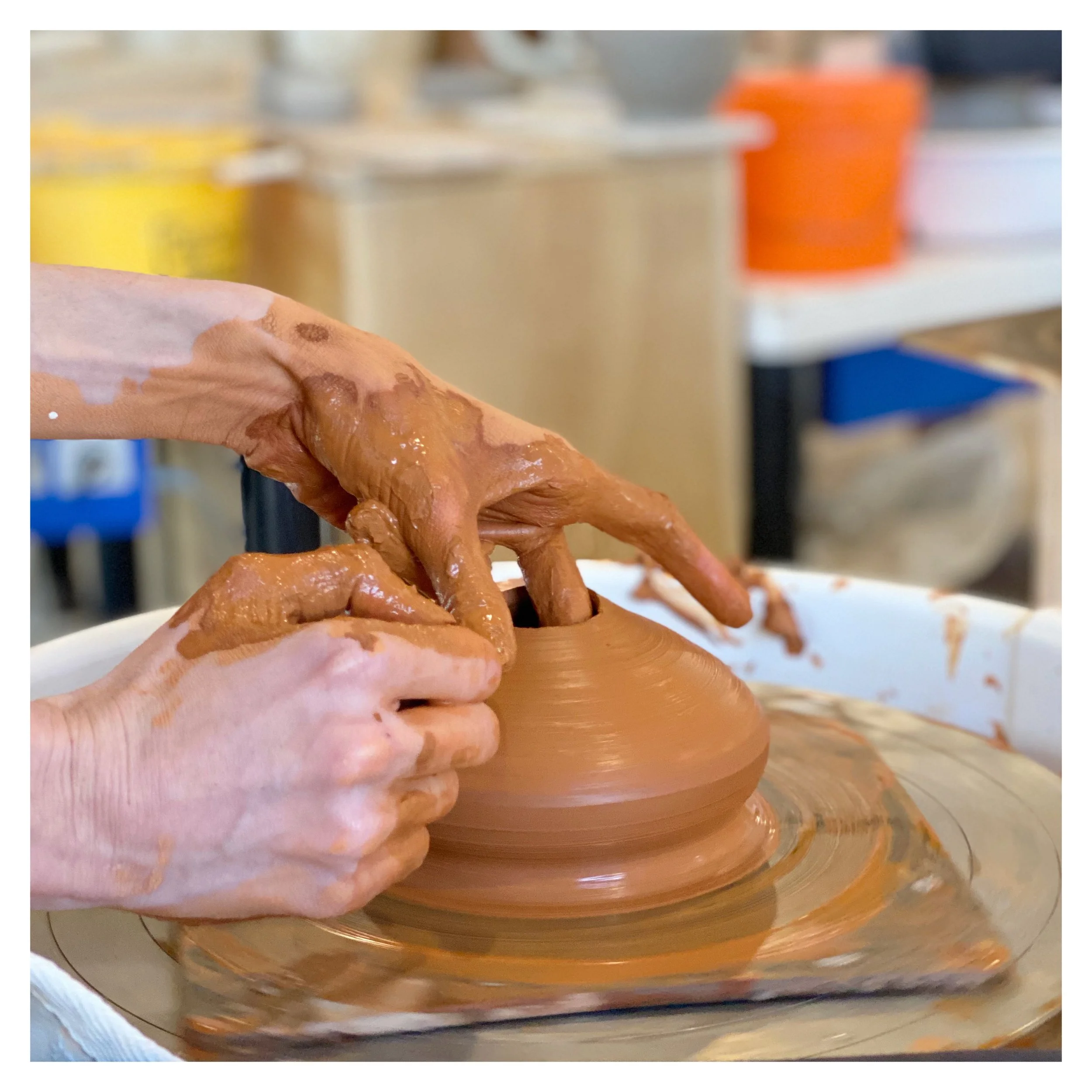
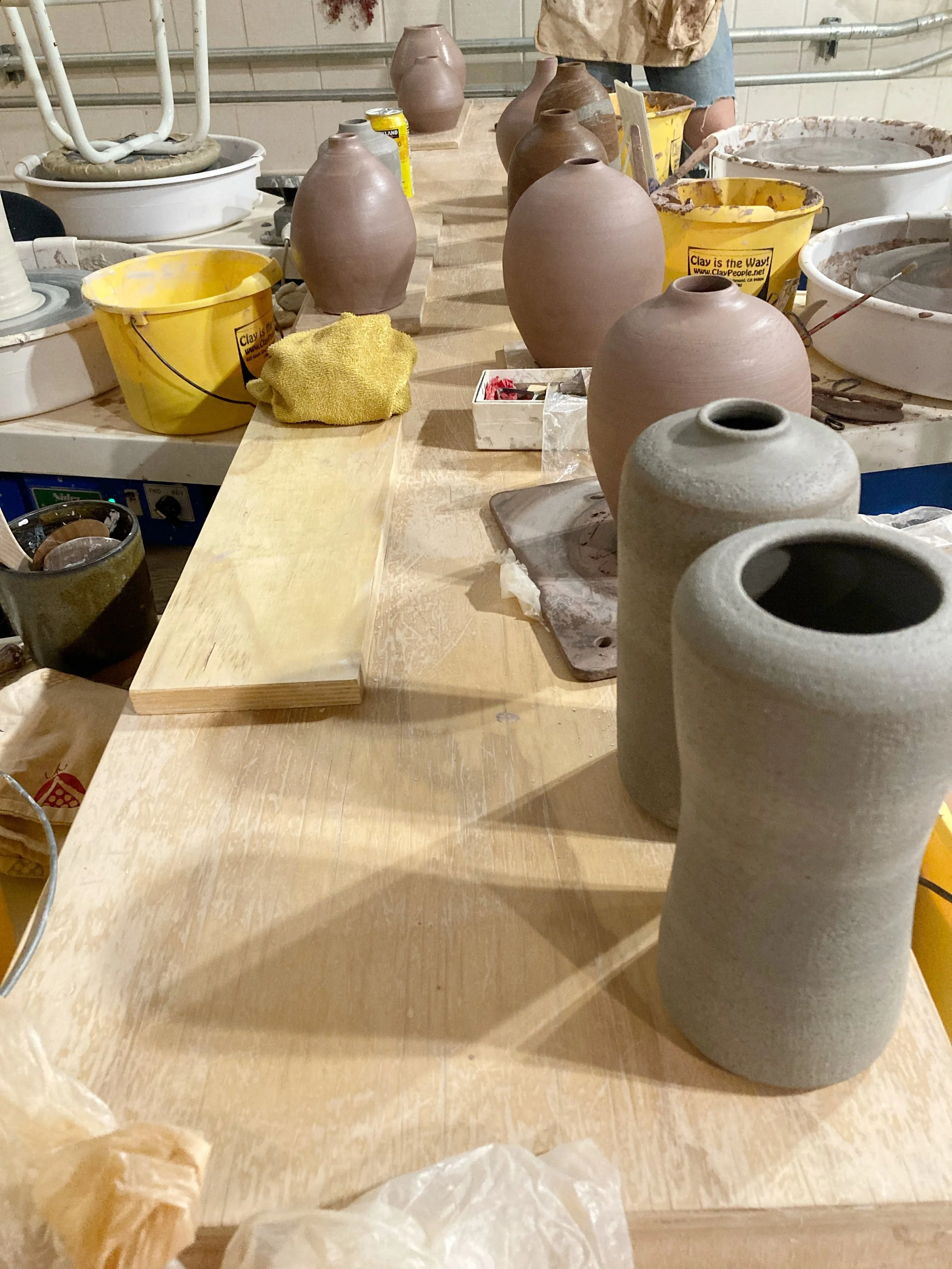
Our beginner wheel throwing classes in San Francisco teach the fundamentals of making pieces on the potter's wheel. You'll learn to prepare clay, center, throw, and trim. Once your pieces are bisque fired, we'll teach you how to glaze them. Our instructors lead through group demonstrations, discussions of example pieces, and one-on-one feedback. We want you to excel, and we encourage every student to use our open studio hours to practice between classes.

4-week class curriculum : Week 1: Throwing, Week 2: Throwing, Week 3: Trimming, Week 4: Glazing

8-week class curriculum: Week 1: Throwing, Week 2: Throwing, Week 3: Trimming, Week 4: Glazing, Week 5: Throwing, Week 6: Throwing, Week 7: Handbuilding and handles, Week 8: Glazing

Sept + Oct

Mondays 6:30pm for 7 weeks for $375 taught by Cathy: Sept 14, 21, 28, Oct 5, 12, 19, 26.

Tuesdays 6:30pm for 8 weeks for $425 taught by Theresa: Sept 8, 15, 22, 29, Oct 6, 13, 20, 27

Sundays at 10:30am for 4 weeks for $250 taught by Ashley. Sept 13, 20, 27, Oct 4. Age 13+

Introduction to Handbuilding: A Little of Everything

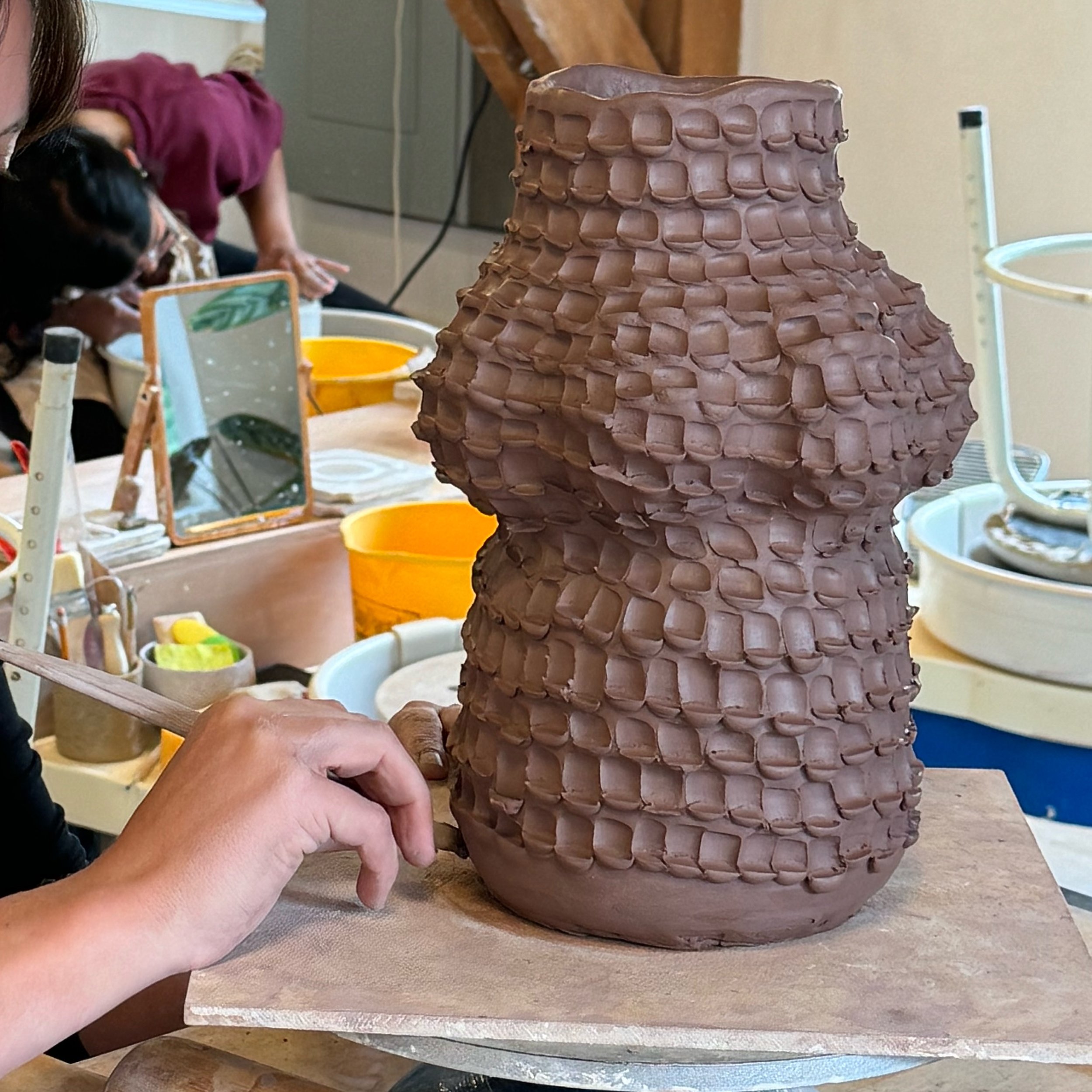
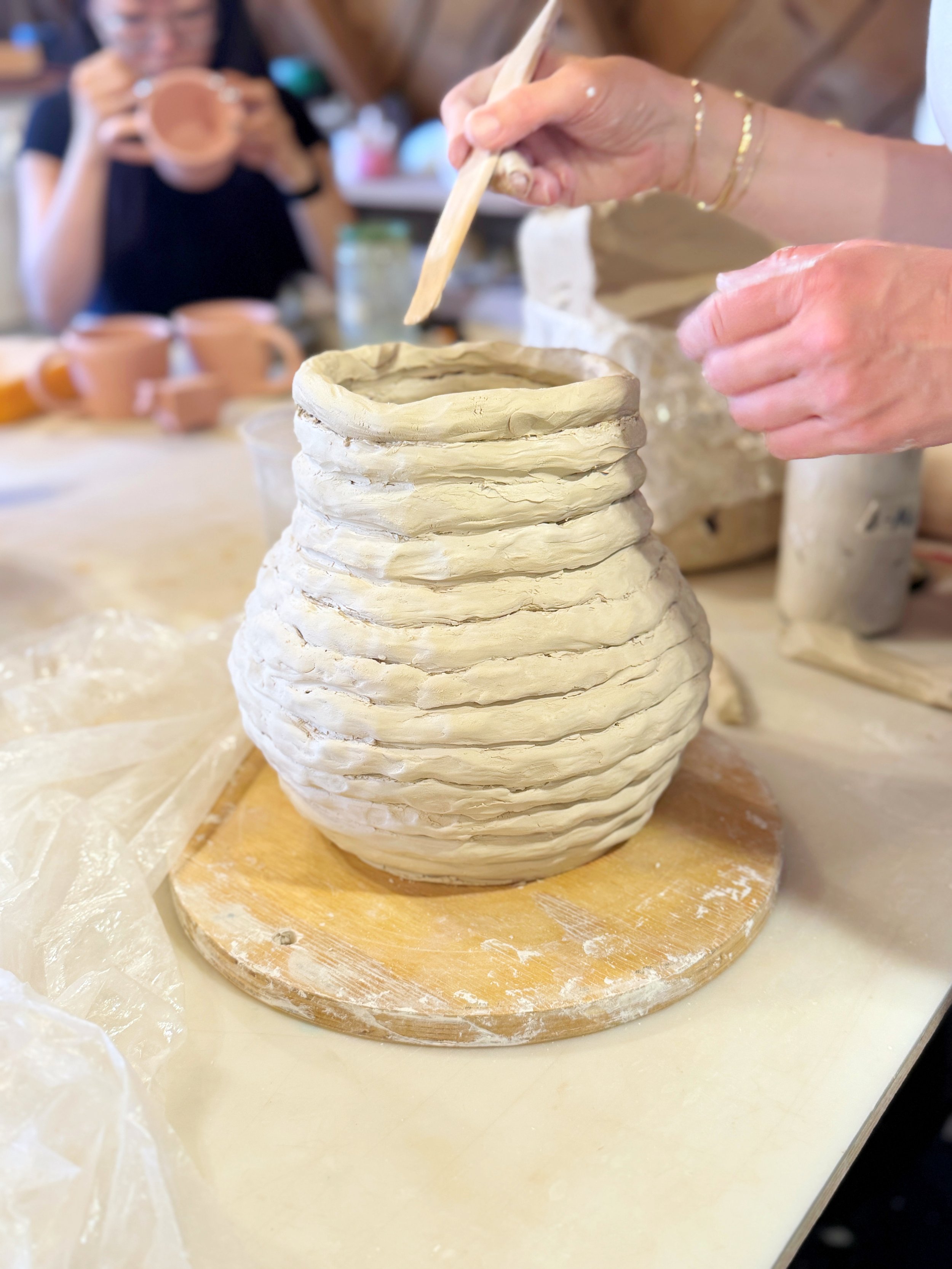
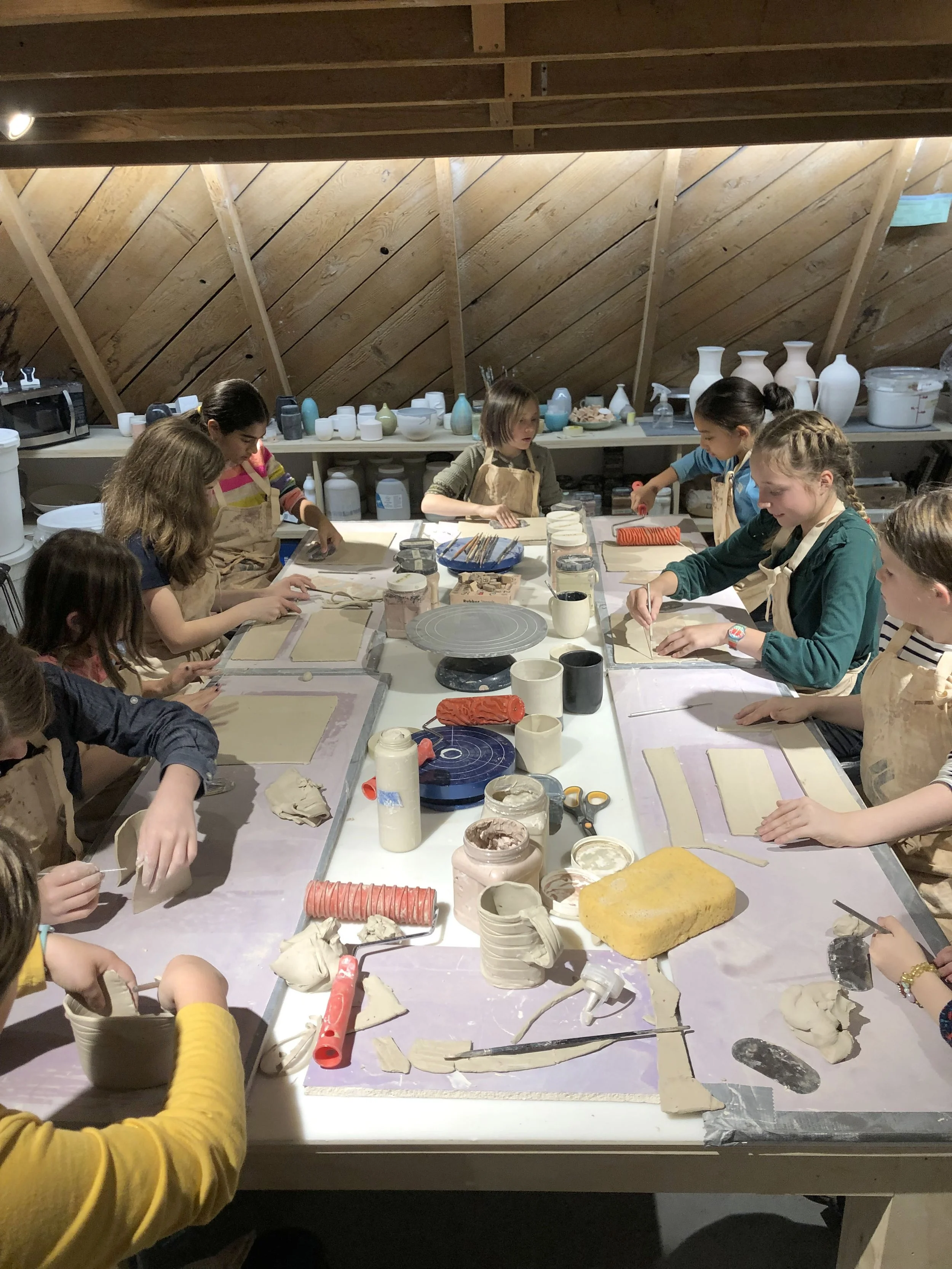
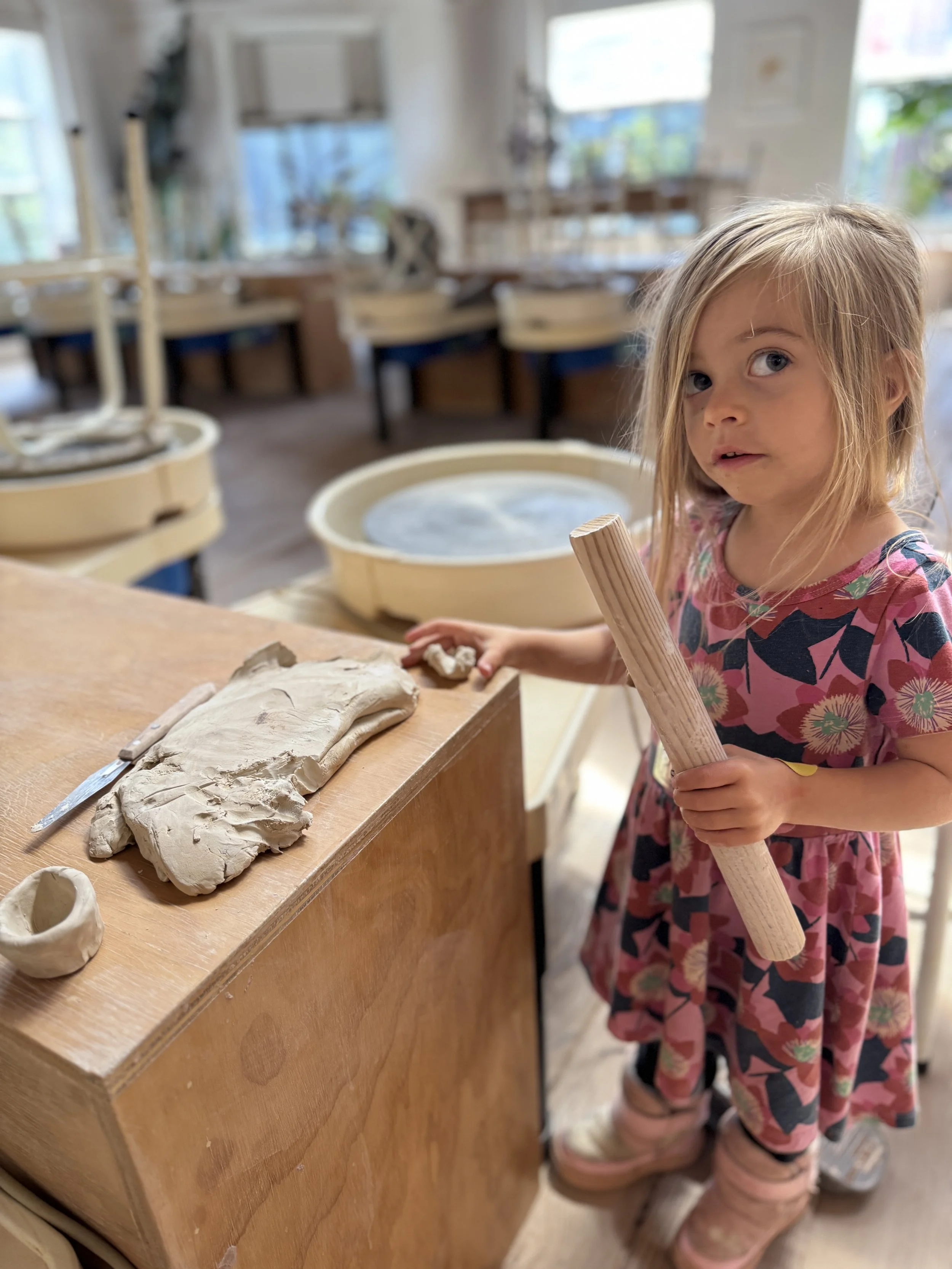
Five weeks, five ways to make something out of clay without ever touching a wheel. This class is a guided tour of handbuilding — you’ll pinch, you’ll slab, you’ll coil, you’ll carve — and by the end you’ll know which technique you want to chase further. For those who are brand new to clay, and also for wheel throwers who want to see what the other half of the studio is doing.

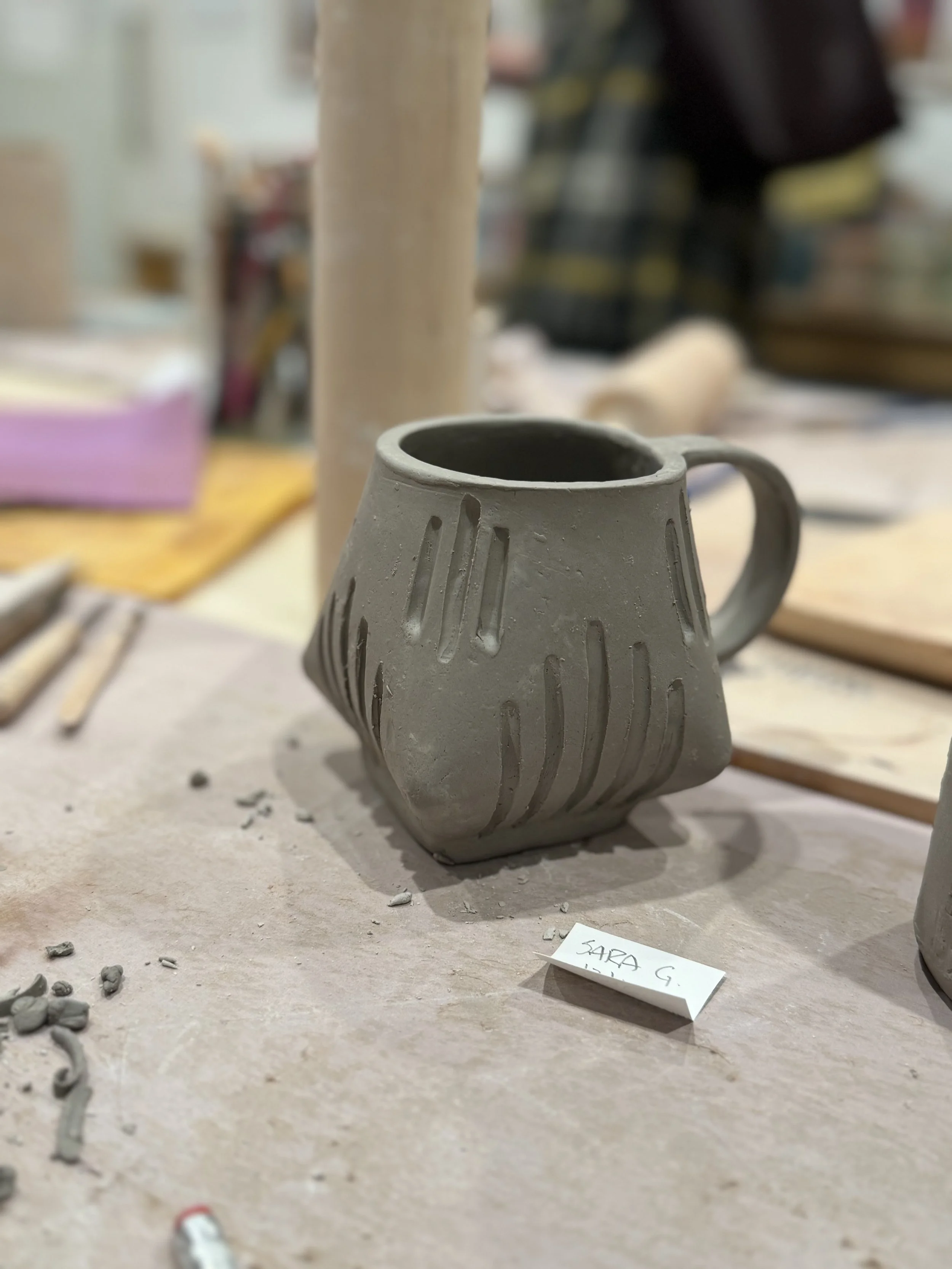
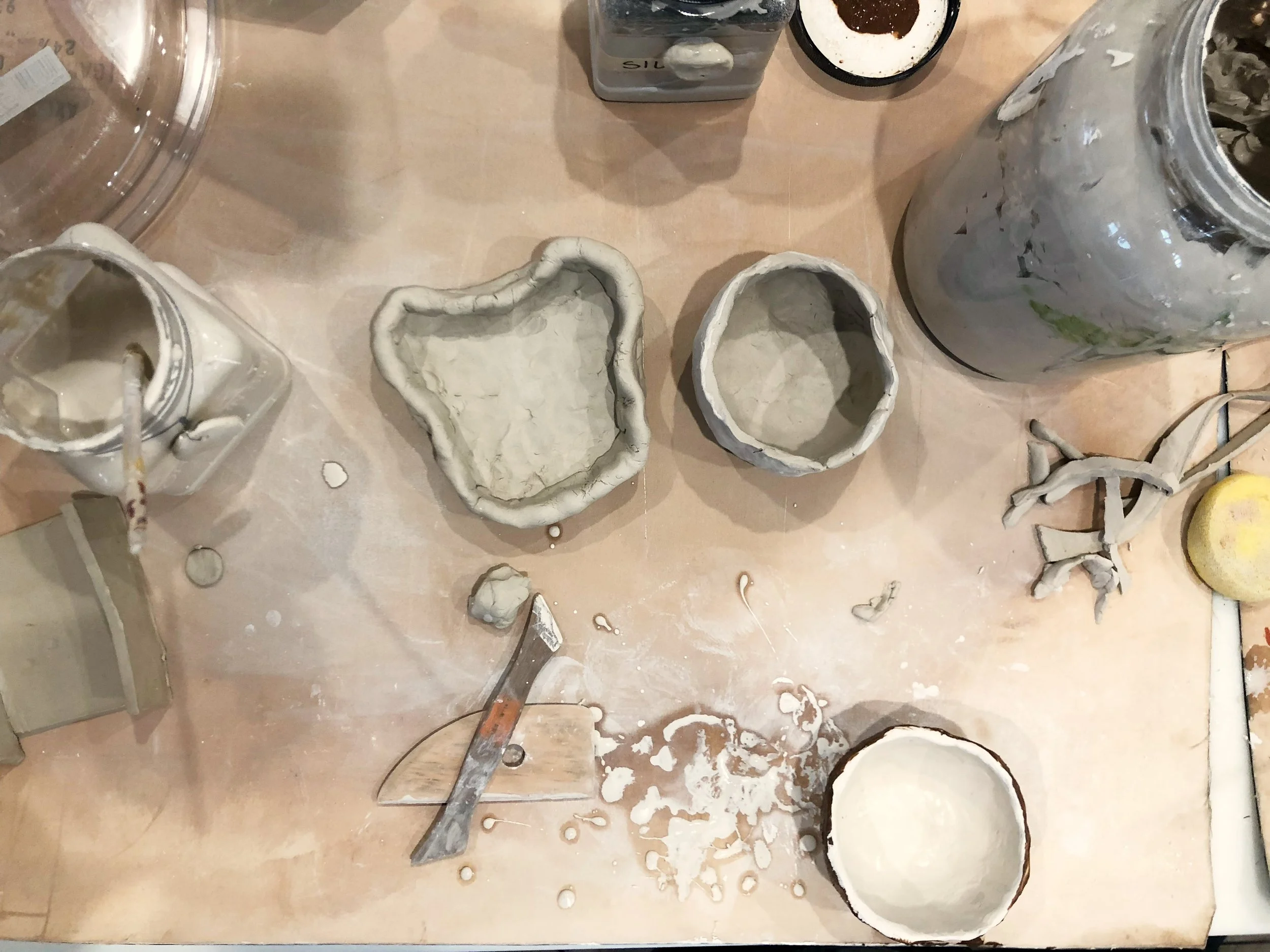
We start small with pinch and press-mold forms, then move into slab construction — soft slabs draped into bowls and platters, hard slabs joined into boxes and planters. From there we build up with coils, and spend a week on the surface techniques that make handbuilt work distinctive: texture, sprigs, colored slip, and sgraffito. Our fifth and final week is glazing, where you’ll pull from our 65+ in-house designed glazes and learn how to finish everything you’ve made. Rachel leads through group demonstrations, discussion of example pieces, and one-on-one feedback.

5-week class curriculum: Week 1: Pinch and press molds, Week 2: Slab building, Week 3: Coil construction, Week 4: Surface decoration and texture, Week 5: Glazing

Saturdays 10am-12:30pm with Rachel for 5 weeks: Sept 12, 19, 26, Oct 3, 10 for $290.

Learn about our studio’s approach to handbuilding, shared tools, and spaces.
Handbuilding with Molds: Small Dishes & Tasting Trays

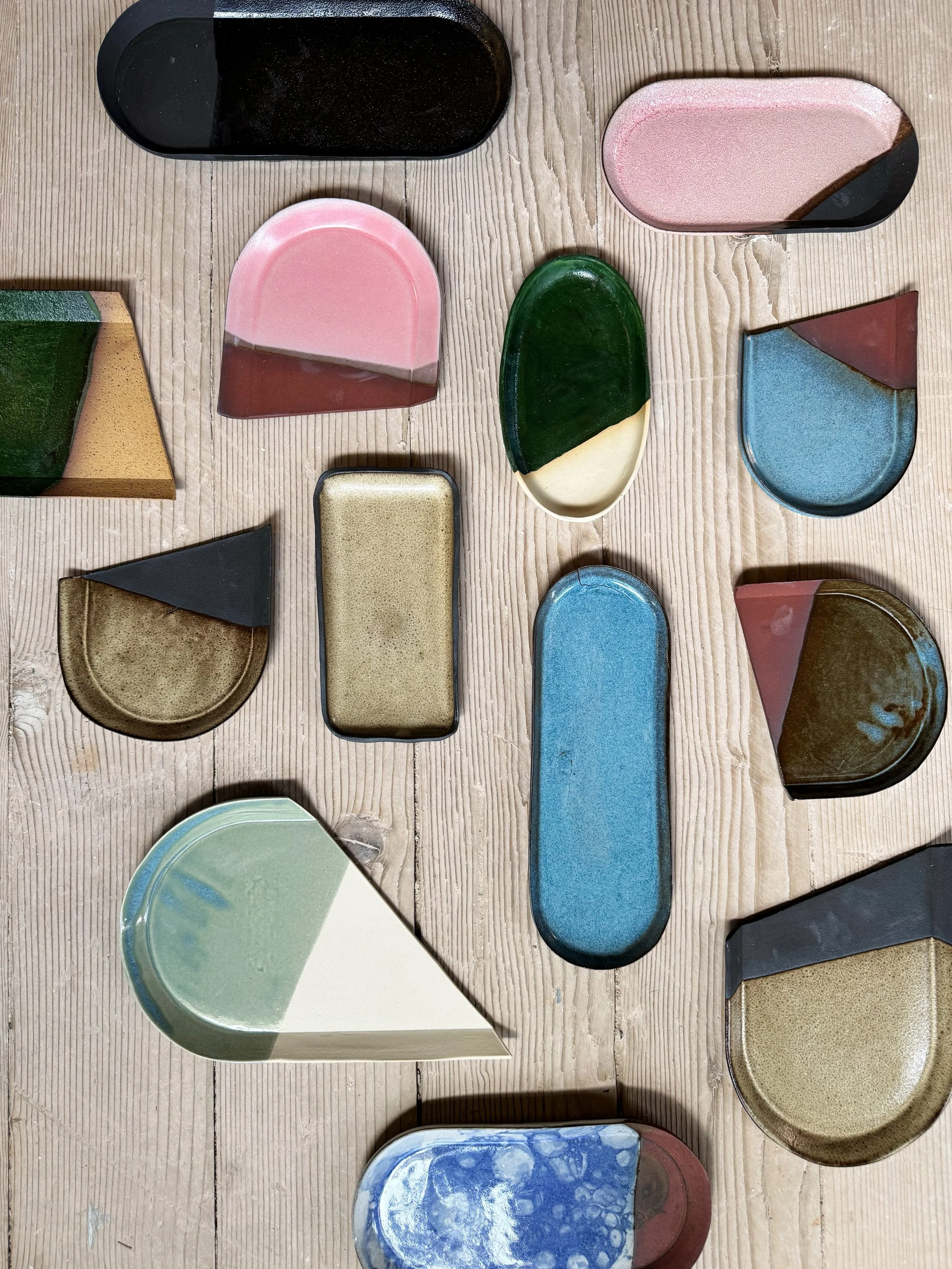
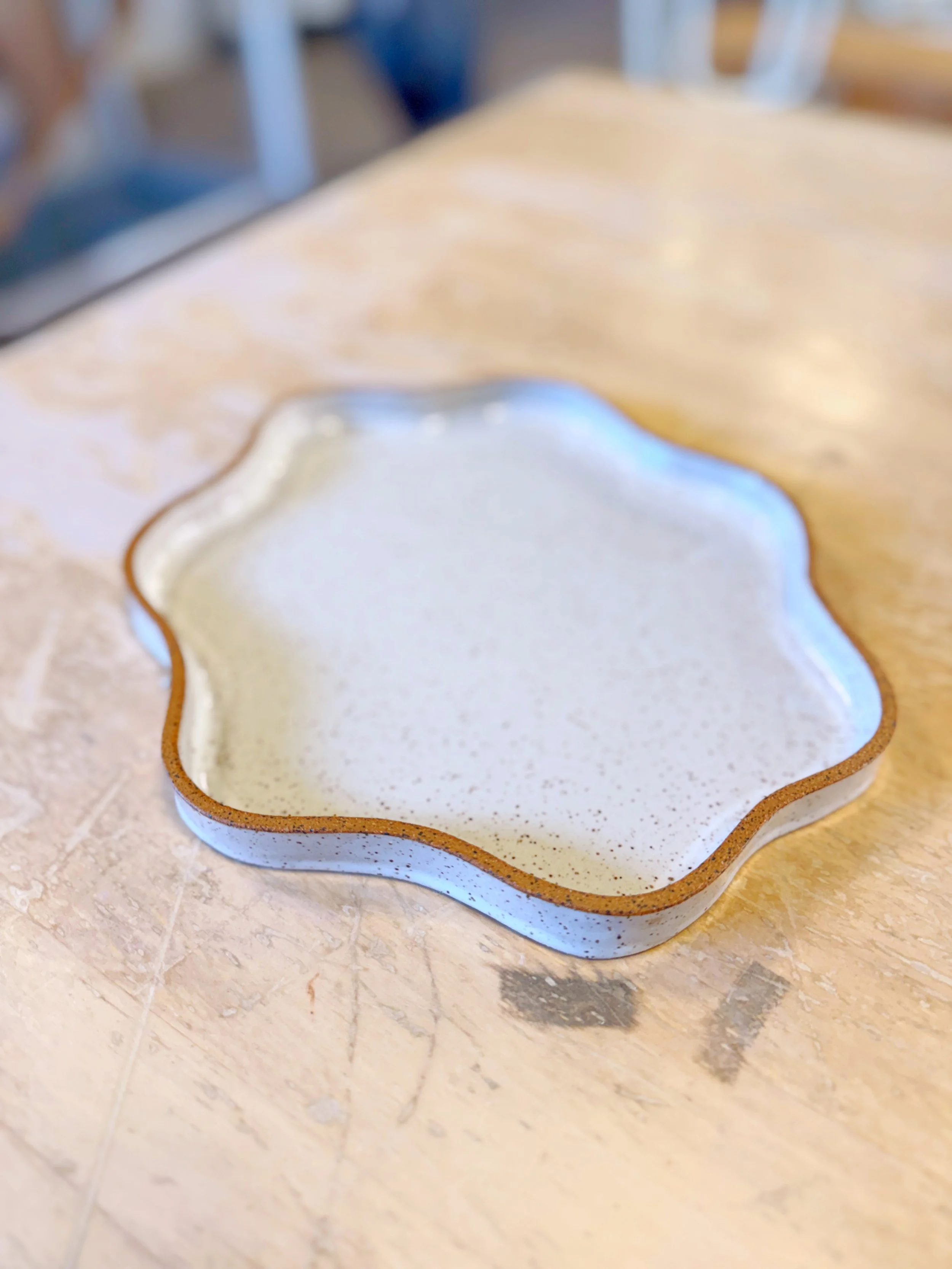
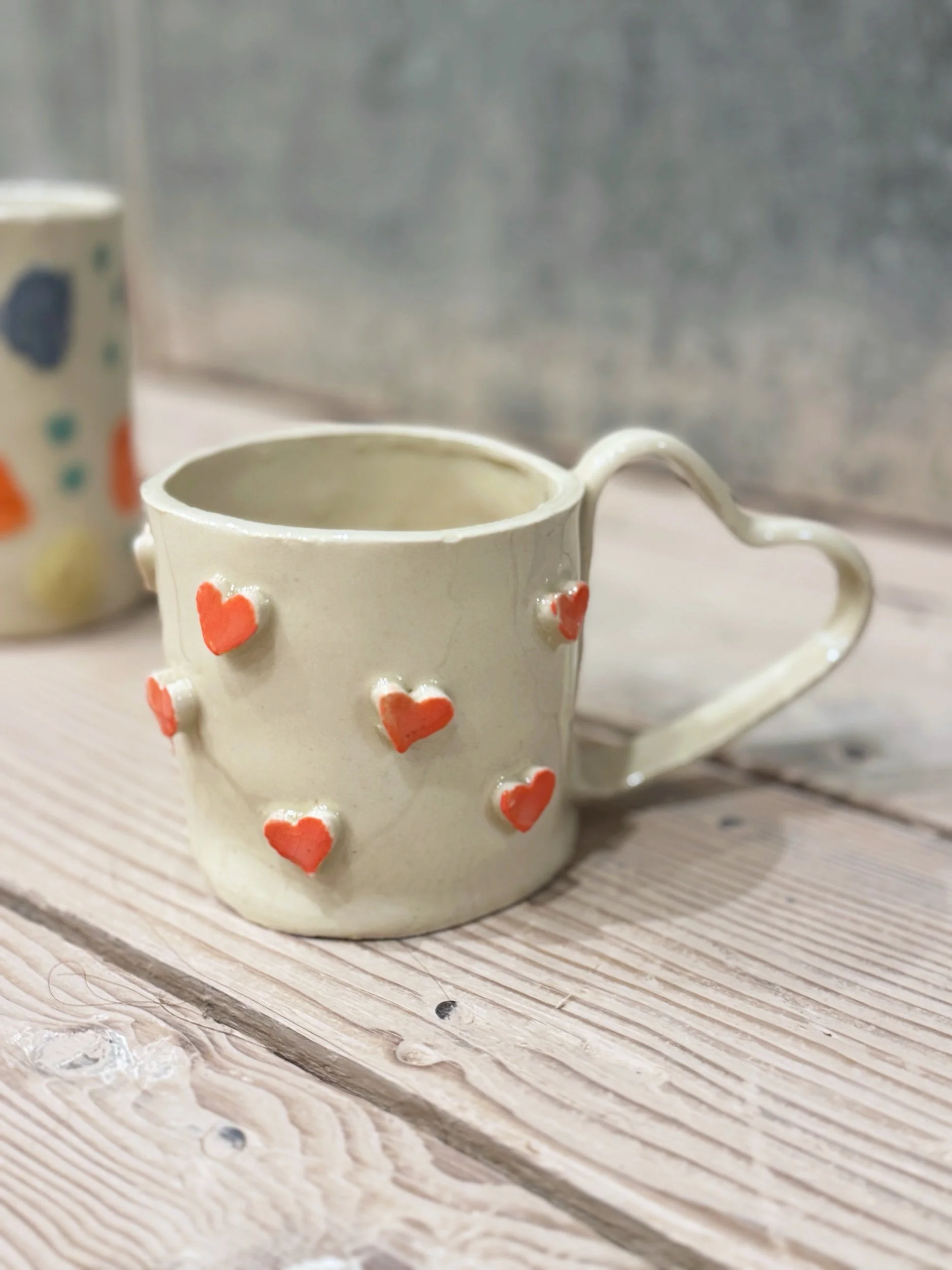
Spend six weeks making the small serving pieces that bring a table together — tasting trays, spoon rests, condiment dishes, catchalls, and the long narrow platters that hold four little desserts and a fork. Working with plaster and MDF molds, you'll be able to make repeatable forms with crisp edges and clean silhouettes, which means you can build an actual set rather than six pieces that almost match. This class is beginner friendly, but open to all skill levels.

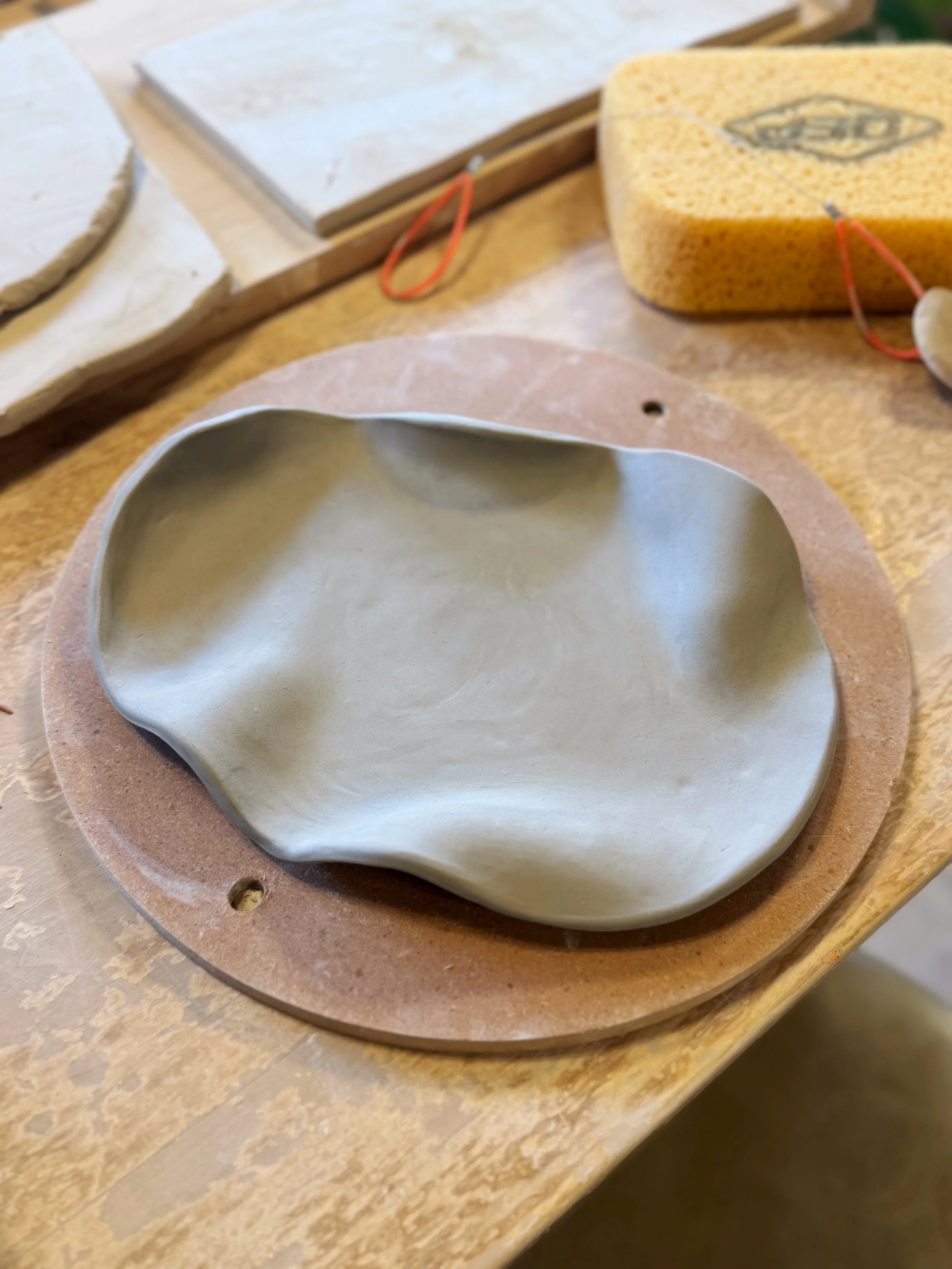
We'll start by learning to roll and compress even slabs, then move into the molds: drape and press forms in plaster, and MDF hump and sled molds for ovals, rounded rectangles, and soft-cornered shapes. You'll learn how to design a rim that reads as intentional, how to raise a shallow wall so a tray holds its contents, how to add feet and undersides that finish the piece, and how to keep a slab flat through drying and firing — the part that makes or breaks this kind of work. We'll also cover making your own simple molds.

Because these forms are so minimal, the details are critical. We'll spend time on surface: which of our 65+ in-house designed glazes suit a quiet shape, how to leave a raw clay edge, and how to glaze a set so the pieces belong to each other. Ashley leads through group demonstrations, discussion of example pieces, and one-on-one feedback, with firing and glazing happening throughout the class.

Wednesdays at 6:30p, for 6 weeks for $350 taught by Ashley: Sept 16, 23, 30, Oct 7, 14, 21

Learn about our studio's approach to handbuilding, shared tools, and spaces.
Next Step Wheel: The Pottery Throwdown

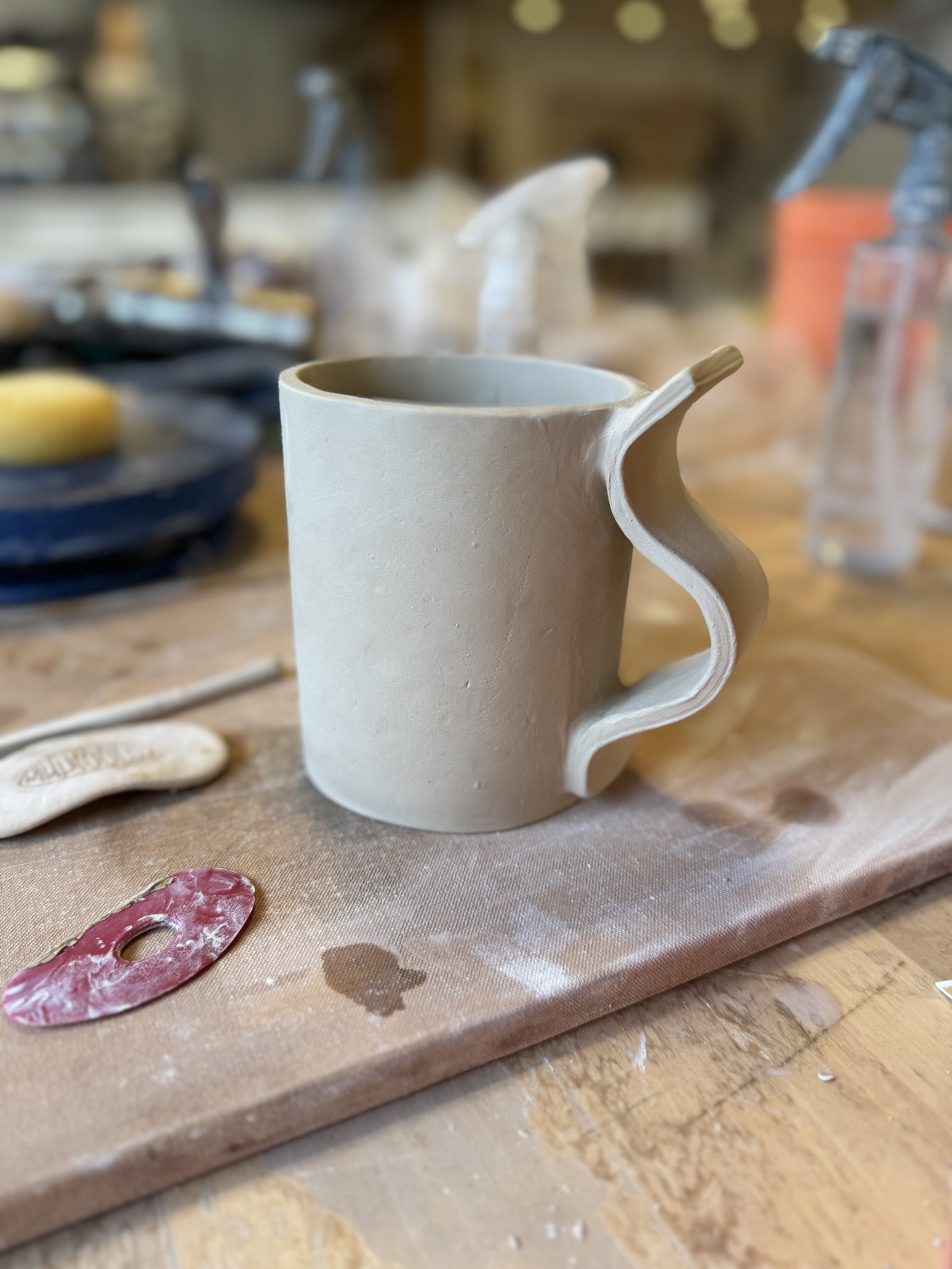
If you’ve ever watched The Great Pottery Throw Down and thought I could do that — here’s your chance. Seven weeks, six challenges, and ongoing discussions and critiques. Each week Keisha reveals a new brief and demonstrates the technique and piece. Then you’ll have ninety minutes on the wheel for your version, and at the end we’ll discuss our process, goals, and how to continue improving.

The format is the fun part. Thirty minutes of demonstration and discussion where the challenge gets revealed and the techniques are explained, an hour and a half of throwing while Keisha moves through the room offering help and encouragement, then a final thirty minutes gathered around the table talking through what everyone made. Seeing eleven different solutions to the same brief is the best design education there is, and it’s genuinely delightful watching someone take a prompt somewhere you never would have.

We’ll push you with new forms, unfamiliar constraints, and techniques you’ve been avoiding. Briefs could be forms like butterballs or moon jars, the widest bowl that isn’t a plate, stretching vases with sodium silicate, and more. The prompts will be curated towards the level of the students who sign up. Week 7 is glazing, where everything you’ve made comes together and we’ll celebrate.

Students ready to move past their beginner phase will be pushed by forms they haven’t tried. Experienced potters in a creative rut will be pushed by prompts they didn’t choose. Either way you’ll leave with a shelf of things you didn’t plan on making.

Taught by Keisha, who is known for her attention to detail, thoughtful design, and caring manner with students. Students must be comfortable centering and throwing a basic cylinder.

Thursdays at 6:30pm for 7 weeks with Keisha for $375; Sept 17, 24, Oct 1, 8, 15, 22, & 29

Children & Teens!

Check out our kids classes

Mommy & Me: Animal Pinch Pots ages 3-5

Kids Slab Studio: ages 5-11

Intro to Nerikomi for Teens: ages 12+

Teens are welcome in our Saturday wheel throwing classes.

When you reach a page that says “order pending” or a receipt you have successfully secured a spot.

Introduction to Throwing & Glazing
from $250.00

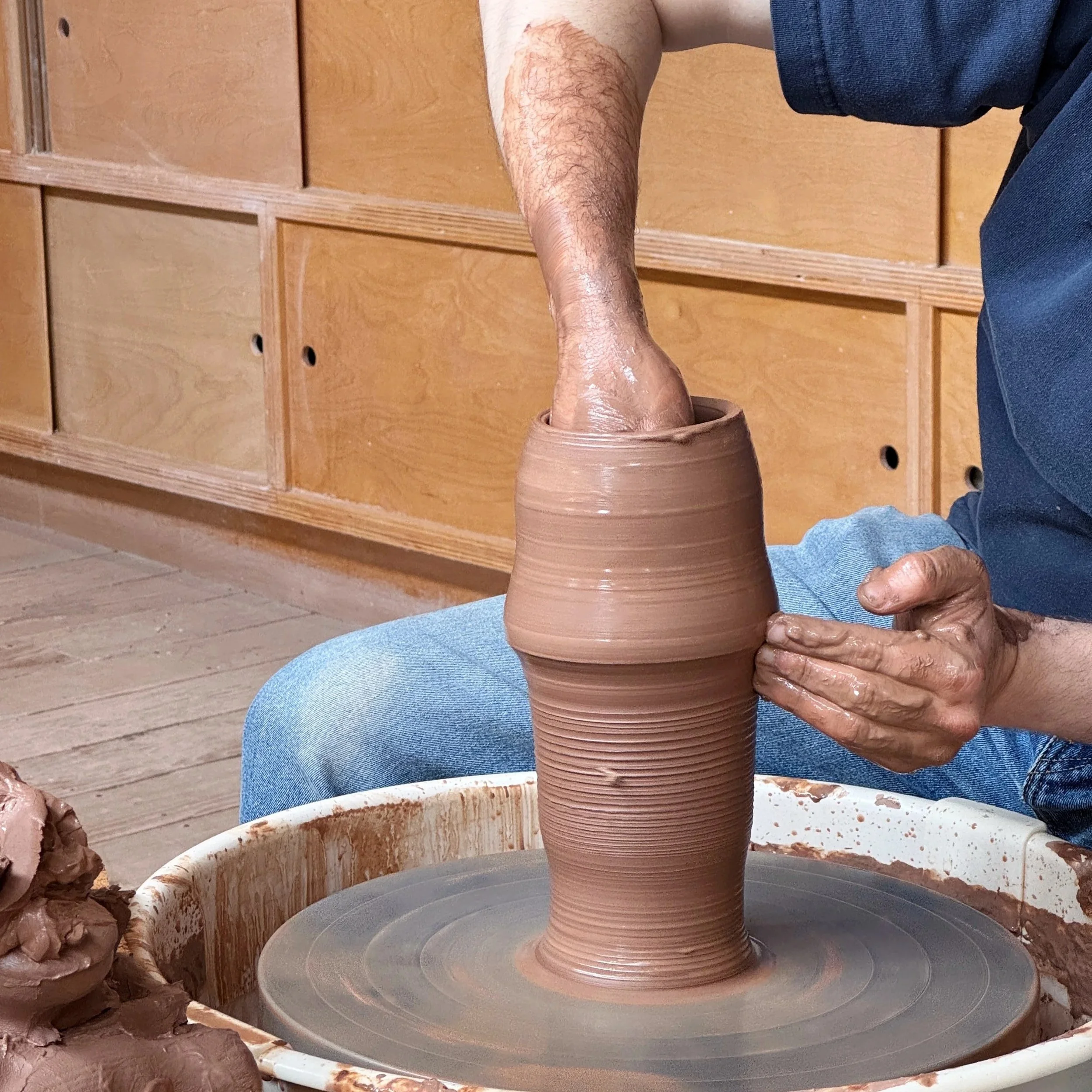
Wheel throwing classes teach the basics of making pieces on the potter’s wheel. Beginning students learn to prepare the clay, center, throw, and trim. After the pieces are fired, all students are taught how to glaze their pieces. Classes are capped at 11 students for high student/teacher interaction.
Introduction to Handbuilding: A Little of Everything
$290.00

Introduction to Handbuilding: A Little of Everything

Five weeks, five ways to make something out of clay without ever touching a wheel. This class is a guided tour of handbuilding — you’ll pinch, you’ll slab, you’ll coil, you’ll carve — and by the end you’ll know which technique you want to chase further. For those who are brand new to clay, and also for wheel throwers who want to see what the other half of the studio is doing.

We start small with pinch and press-mold forms, then move into slab construction — soft slabs draped into bowls and platters, hard slabs joined into boxes and planters. From there we build up with coils, and spend a week on the surface techniques that make handbuilt work distinctive: texture, sprigs, colored slip, and sgraffito. Our fifth and final week is glazing, where you’ll pull from our 65+ in-house designed glazes and learn how to finish everything you’ve made. Rachel leads through group demonstrations, discussion of example pieces, and one-on-one feedback.

5-week class curriculum: Week 1: Pinch and press molds, Week 2: Slab building, Week 3: Coil construction, Week 4: Surface decoration and texture, Week 5: Glazing

Saturdays 10am-12:30pm with Rachel for 5 weeks: Sept 12, 19, 26, Oct 3, 10 for $290.

Handbuilding with Molds: Small Dishes & Tasting Trays
$350.00

Spend six weeks making the small serving pieces that bring a table together — tasting trays, spoon rests, condiment dishes, catchalls, and the long narrow platters that hold four little desserts and a fork. Working with plaster and MDF molds, you'll be able to make repeatable forms with crisp edges and clean silhouettes, which means you can build an actual set rather than six pieces that almost match. This class is beginner friendly, but open to all skill levels.

We'll start by learning to roll and compress even slabs, then move into the molds: drape and press forms in plaster, and MDF hump and sled molds for ovals, rounded rectangles, and soft-cornered shapes. You'll learn how to design a rim that reads as intentional, how to raise a shallow wall so a tray holds its contents, how to add feet and undersides that finish the piece, and how to keep a slab flat through drying and firing — the part that makes or breaks this kind of work. We'll also cover making your own simple molds.

Because these forms are so minimal, the details are critical. We'll spend time on surface: which of our 65+ in-house designed glazes suit a quiet shape, how to leave a raw clay edge, and how to glaze a set so the pieces belong to each other. Ashley leads through group demonstrations, discussion of example pieces, and one-on-one feedback, with firing and glazing happening throughout the class.

Next Step Wheel: The Pottery Throwdown
from $375.00

Next Step Wheel: The Pottery Throwdown

If you’ve ever watched The Great Pottery Throw Down and thought I could do that — here’s your chance. Eight weeks, seven challenges, and ongoing discussions and critiques. Each week Keisha reveals a new brief and demonstrates the technique and piece. Then you’ll have ninety minutes on the wheel for your version, and at the end we’ll discuss our process, goals, and how to continue improving.

The format is the fun part. Thirty minutes of demonstration and discussion where the challenge gets revealed and the techniques are explained, an hour and a half of throwing while Keisha moves through the room offering help and encouragement, then a final thirty minutes gathered around the table talking through what everyone made. Seeing eleven different solutions to the same brief is the best design education there is, and it’s genuinely delightful watching someone take a prompt somewhere you never would have.

We’ll push you with new forms, unfamiliar constraints, and techniques you’ve been avoiding. Briefs could be forms like butterballs or moon jars, the widest bowl that isn’t a plate, stretching vases with sodium silicate, and more. The prompts will be curated towards the level of the students who sign up. Week 8 is glazing, where everything you’ve made comes together and we’ll celebrate.

Students ready to move past their beginner phase will be pushed by forms they haven’t tried. Experienced potters in a creative rut will be pushed by prompts they didn’t choose. Either way you’ll leave with a shelf of things you didn’t plan on making.

Taught by Keisha, who is known for her attention to detail, thoughtful design, and caring manner with students. Students must be comfortable centering and throwing a basic cylinder.